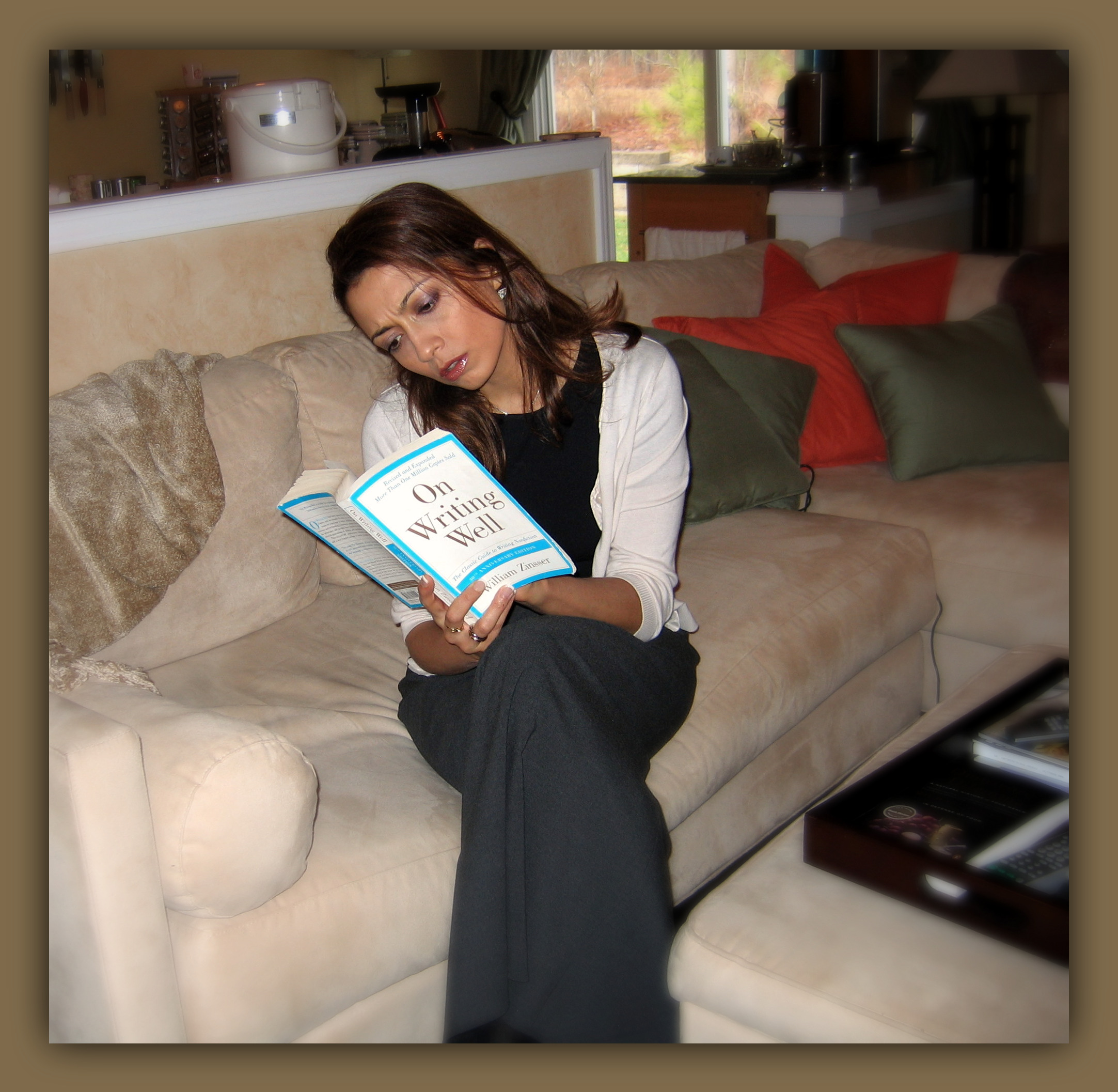
 It was nearly two years after I had received “On Writing Well” that I started to read it. William Zinsser is not just writing a book on writing well; he is in love with the art of writing and using the English language. This passion comes through clearly in every page and invites the reader to ride along.
I love William Zinsser’s writing style. He writes about the English language and yet it reads like poetry in several parts. While he is certainly not one with a small vocabulary and knowledge of the language, he writes ever so clearly. With his writing, less is really more and right delivery of the words on paper lies at the heart of all writing.
According to Zinsser, and perhaps countless writers, writing is hard work. It is no easy task to produce good and original content regularly. It takes discipline, determination, practice, daily effort, and countless reviews of what you have written, including a read out loud, for the result to become polished and worthwhile. The room to grow and improve is large, and our efforts should be to fill that room someday.
Zinsser is commanding, bold and brazen in giving advice and delivering his points for the sake of better use of the English Language. He wants us to simplify, and to have a purpose for each word we use. He wants us to use far less clutter. The secret, he says, is to strip every sentence to its cleanest components. His fabulous example of our freedom from clutter is a beautiful piece from the Walden, which I must repeat for your sake:
“I went to the woods because I wished to live deliberately, to front only the essential facts of life, and see if I could not learn what it had to teach me, and not, when I came to die, discover that I had not lived.”
Clutter takes away from the strength of our message and adds an air of pomposity to our writing. The chapter on Clutter is my favorite. He entertains while berates us for letting the American language become so infested by clutter and redundancy.
What then would be our style, if all of us strip all our sentences to their bare bones? In response, Zinsser tells us to first strip and simplify, and understand what is clutter and what is essential. Then build your style around that correct foundation.
He warns us to distinguish between the types of readers who stop reading because of sloppy workmanship (your fault) versus those who are not interested in what you have to say (no one’s fault). Just as sloppy workmanship can deter a reader with good intentions, clean, simple, and smooth writing can attract a reader deep into your writing. The key is to know the difference and to apply your skills where it matters.
Words, words, words. What to use, what to avoid. William Zinsser is no fan of journalese, and neither am I. It reminds me of the corporate lingo that we have invented and continue to invent every day. We turn nouns to verbs and verbs to nouns, overnight. While temptation might be strong to use one of these popular phrases (“fire off”, “beef up”, “emote”…), do not give in! The race in writing, he tells us, is not to the swift but to the original. Be original he tells us. After all, words are all the tool we have to use in writing.
When he talks about methods, he touches on a very key element: Unity. Unity keeps the reader’s interest focused. First consider the unity of pronoun: What person are you going to speak in? Whatever your choice, it’s important not to switch back and forth. You can speak in first person or third person, so long as you remain consistent. Second consider unity of tense: Are you going to speak in the past or present? Stories can be told from both tenses but the reader does not want to time travel with us at our will.
Reading is the best pastime for an active mind! If you like to see the other book reviews, check the index of In Print.
One of the most essential chapters of the book is “Bits & Pieces” where William Zinsser takes us through each element of the language and its proper use. Verbs, he tells us, are best when using in active form rather than passive. Most Adverbs and Adjectives are unnecessary, use with caution. The Little Qualifiers, and I liked these guys so much, dilute your style. They are the “very”, “a bit”, “sort of”, “kind of”, you get the point. Then if you are still reading, you get a short lesson in punctuation and learn the difference between use of “That” and “When”.
After the fundamentals, we enter the section where he takes us through all forms of nonfiction as literature. My favorite chapters are writing about people, places and yourself. The chapters are filled with examples of what he finds admirable and what he urges us to avoid.
I love how well William Zinsser can articulate any abstract concept in the realm of writing. In The Sound of your Voice chapter, he articulates style for us. Whatever our style, he tells us not to be crude, verbose, corny, and hence contemptuous of the English language. Stay away from cliches, and be fresh and original, he repeats over and over.
The last pages of the book are some of the best and most inspiring for the English Language lover. Zinsser reminds us that verbs have more vigor than nouns, that active verbs are better than passive verbs, that short words are easier to read than long ones, and that if you would like to write better than every one else, you have to want to write better more than everybody else.
Indeed, he has inspired me to write my own pet-peeves around the English Language by emphasizing hte 19 errors one should in use of the language.
 I am Farnoosh, the founder of Prolific Living. So glad you are here. My mission is to empower you to unblock your creative genius to live your dream life.